Understanding service animals, ESAs and public access
April Slaughter | Lehi Free Press
Service and emotional support animals are now a common sight in Utah County, from grocery stores to waiting rooms. This increased presence sparks important conversations about disability and mental health, but it has also caused significant confusion about the actual legal rights and limits for these animals.
That confusion has real consequences. People who rely on service animals can be stopped at the door, questioned, or slowed down in places where they’re fully entitled to be. Business owners are left trying to enforce rules without crossing a legal line. When an untrained pet disrupts, it makes life harder for the people who depend on well-trained service animals to get through their day.
The key point: Service animals and emotional support animals (ESAs) have different rights and responsibilities under the law.
Under the Americans with Disabilities Act (ADA), a service animal is defined as a dog (or, in some cases, a miniature horse) that has been individually trained to perform specific tasks for a person with a disability. Under the ADA, disability means a physical or mental impairment that substantially limits one or more major life activities. The tasks performed by the animal must directly relate to the person’s disability. This can include, for example, guiding someone who is blind, alerting someone who is deaf, picking up dropped items, helping with balance, or responding to medical conditions such as seizures or changes in blood sugar levels. Animals that solely provide comfort or emotional support, without task-specific training, are not considered service animals under the ADA.
The ADA also specifies where service animals are permitted. Restaurants, grocery stores, retail shops, government buildings and many medical offices fall under those rules. ESAs do not have the same public access rights as service animals.
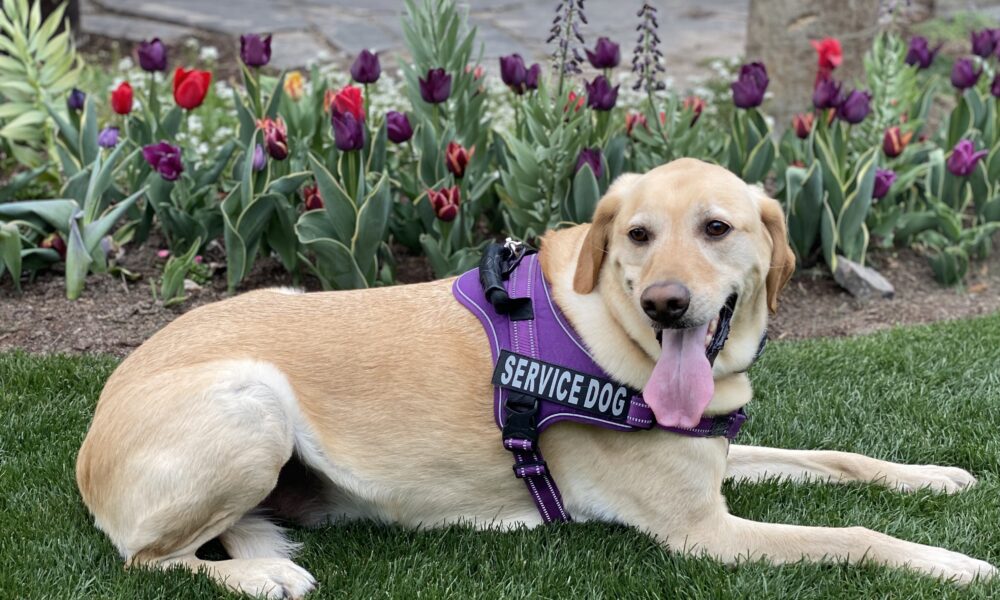
Much of the public confusion stems from the idea that service animals must be “certified.” There is no federal certification, no official paperwork, no required vest. Handlers may use gear to avoid repeated questions, but the law doesn’t require them to do so.
Businesses have legal limits on what questions they can ask about a service animal. If it is not obvious that an animal is a service animal, employees may only ask two questions: (1) Is the animal required because of a disability? and (2) What work or task has the animal been trained to perform? Under ADA regulations, employees may not ask for details about a person’s disability, request medical documentation, require proof of training or request a demonstration of the animal’s tasks.

Service animals must still follow basic rules. They must be under control and housebroken. If an animal is disruptive and the handler doesn’t correct the behavior, a business can ask that the animal be removed. Even then, staff must continue to provide service to the person without the animal.
ESAs may qualify for housing accommodations under housing law, even in no-pet buildings, but they do not have a general right to enter businesses.
Utah law specifically addresses misrepresentation. It is a criminal offense to knowingly misrepresent an animal as a service animal or ESA, meaning falsely claiming that an animal is legally recognized when it is not. While enforcement varies, the intent of the statute is to protect people with disabilities from having their access undermined by fraudulent or misleading claims.
Public behavior matters, too. Service animals are not pets. They’re trained to stay focused on their handler. Touching, calling to, photographing or distracting a working animal can interfere with tasks or delay medical alerts. Additionally, no one is entitled to personal details about someone’s disability. Questions should be limited and respectful. Treating handlers as curiosities or confronting them in public only creates barriers that the law is meant to remove.
As Utah County grows, understanding and respecting the legal differences between service animals and ESAs is key to keeping public spaces welcoming for everyone. Service animals are essential tools for independence and are protected by law. ESAs have their own legal protections, but they do not include public access rights. Knowing these distinctions and responding with respect enables everyone to navigate daily life with greater dignity and ease.
For more information about the rights of service animals and their handlers, visit ada.gov/topics/service-animals.














Publicar comentário