Where Is Elizabeth Smart Now? What Happened to Brian David Mitchell and Wanda Barzee?
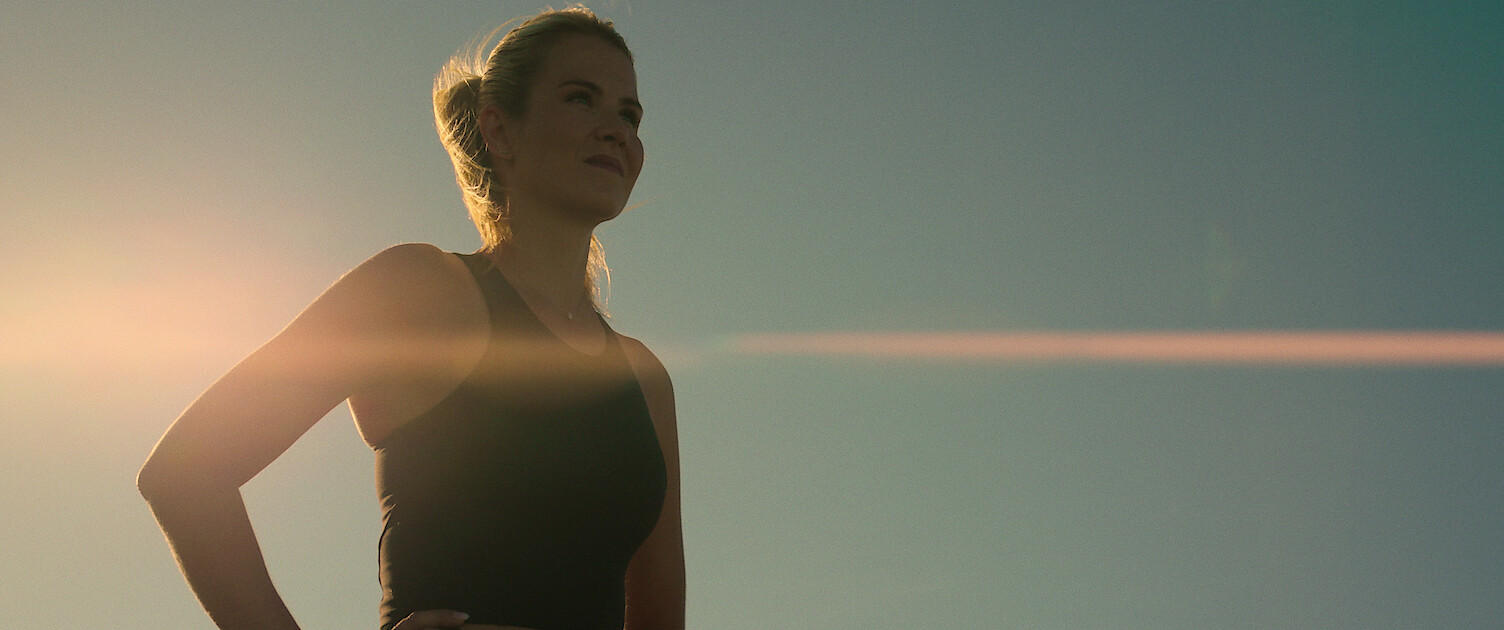
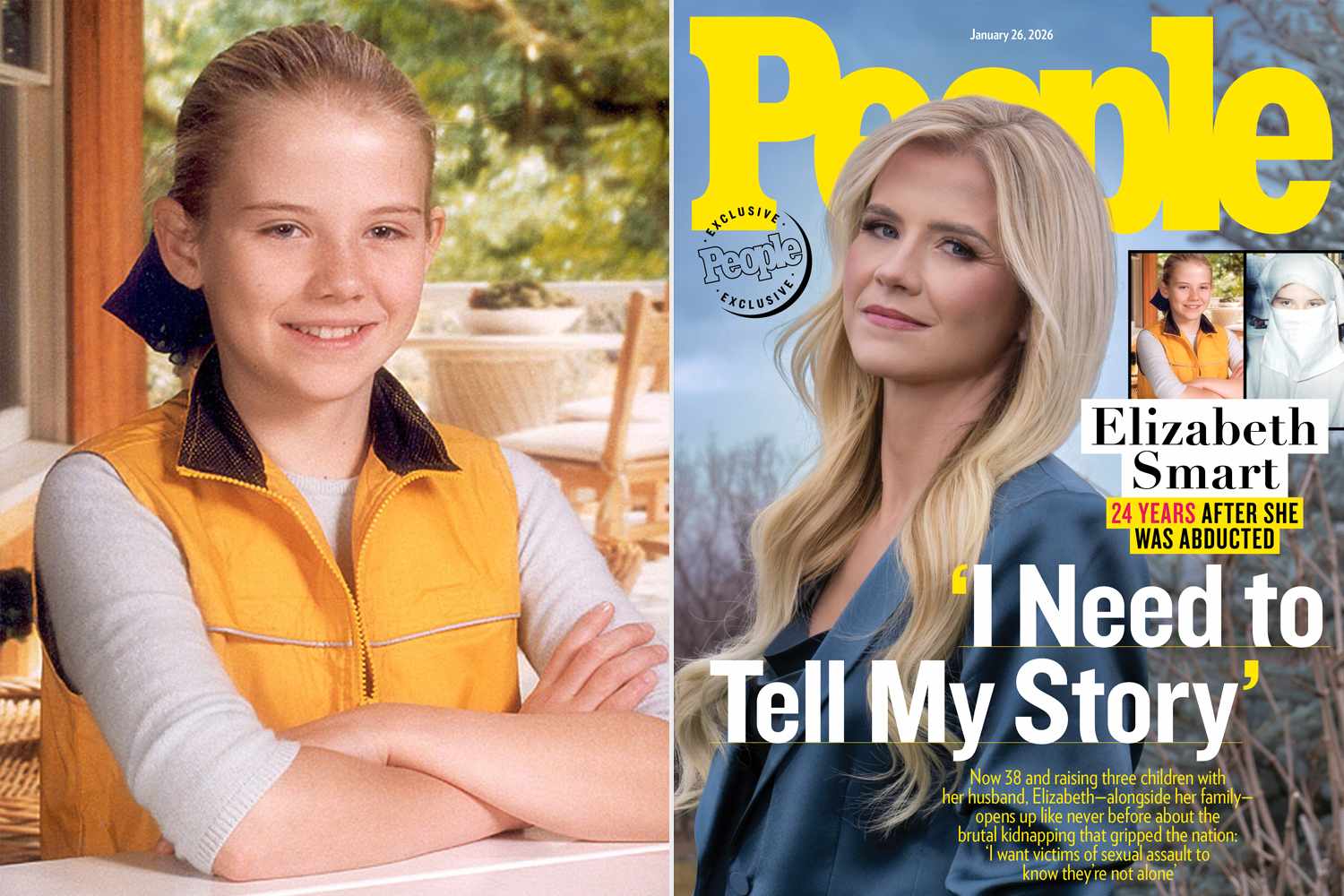
“There are happy endings,” Elizabeth Smart says of the new documentary Kidnapped: Elizabeth Smart. The film recounts the horrific kidnapping that she endured when she was just 14 years old, in which Brian David Mitchell, a street preacher her family had hired for odd jobs, abducted her from her home in Salt Lake City and sexually assaulted her for months before she was discovered by passersby and rescued by police officers in nearby Sandy, Utah.
More than two decades later, Elizabeth has an exceptionally positive and remarkably hopeful perspective for someone who’s lived through a nightmare. “I hope that people who watch this [documentary can see] that even after terrible things happen, you can still have a wonderful life.”
Tudum and Netflix’s Skip Intro podcast each sat down with Elizabeth to talk through what’s happened since the trial, what her life looks like now, and what fuels her unshakable optimism.
Where is Elizabeth Smart now?
In 2012 Elizabeth married Matthew Gilmour, a Scottish native whom she met while on a mission trip to Paris. “Because he didn’t know anything [about] my past, he wasn’t afraid to tell me what he really thought,” Elizabeth tells Skip Intro host Krista Smith. “I appreciate that I’m not my past [with him]. I am just who I am right now, right here in the moment.”
They have three children, and still live in Utah. Elizabeth jokes that there have been times when the family would dream about moving to Scotland, but she doesn’t think it would ever happen: “I love America,” she says. “I love Utah,” where she still gets recognized at the grocery store and Costco. “But outside of Utah, [it doesn’t happen] as much because people wouldn’t expect to see me. So sometimes I’ll get a double look, like — ‘You look so familiar, are you my daughter’s friend? How do I know you?’ [laughs]”
As a parent, Elizabeth is raising her children with the same fierce love and support that defines the Smarts, with the added perspective that comes with being a survivor of sexual violence. “[My experience] makes me a lot more conscious and aware of what my kids are doing, who they’re interacting with — making sure that they understand that their safety is a priority to me,” she tells Tudum. “It’s why we don’t do sleepovers. I am very intentional and cautious about where they go and who they interact with. It’s led to a lot of safety conversations, and using the correct body part names, and not associating guilt or shame with being able to say ‘penis’ [as easily as they say] ‘elbow’.”
Today, Elizabeth continues to provide support to survivors in their healing process, beginning with providing a safe space for others to share their experiences. She says that her purpose is clear: “To try to change the conversation around sexual violence, to help survivors understand that the only shame and guilt [belongs] with the perpetrator. To let other survivors know they’re not alone.”
“Stories are so powerful. It’s why I agreed to do this [film],” she continues. “Documentaries are how we learn, and they hit me in the heart and stay with me so much longer than [statistics] do. I want to give survivors a place to share their stories as a community. We also have our survivor fund, to try to help pay for medical costs, first and last month’s rent, airplane tickets, or scholarships. Our fund isn’t huge, but we try and do as much as we can to help survivors fill in the gaps.”
Elizabeth recently published her third book, Detours, a memoir that tracks her journey through trauma into normalcy. And for Elizabeth, being able to live a normal life — with normal challenges, normal concerns, and normal thrills — is nothing short of a triumph. “I like being at home with my family. I like a good dinner and then [watching a] movie with my kids, traveling up to our cabin and going out boating and just enjoying being outside. Right now, my kids are all on ski team, and watching them out-ski me is pretty exciting,” she says on Skip Intro. “Just watching my kids be happy, seeing them succeed and find their passions and things that they like doing — I feel like those are pretty big wins.”
What did Elizabeth Smart think about the documentary?
Smart remembers seeing an early version of the documentary and sensing that the filmmakers hadn’t wanted to re-traumatize her in their storytelling. “They wanted to be so sensitive to me. Well, I didn’t go on vacation,” she jokes on Skip Intro. “I definitely wasn’t just sunbathing up in the mountains waiting for someone to come and rescue me.” With her permission, the documentary confronted the truth, and retold her story with graphic accuracy. “When I saw the final cut, I was like, ‘Thank you.’ [The filmmakers] made me proud. They did justice to my story.”
While Elizabeth didn’t feel emotional watching herself onscreen, it was her family’s interviews that moved her, and gave her a perspective on her kidnapping that she hadn’t fully understood before: “I remember thinking [when I first got back], ‘Well, it wasn’t so bad for you guys. Like, you were all together, but I was by myself.’ Now, as a parent myself … what they went through was horrific. Listening to them talk about it 20-plus years later made me emotional,” she says on Skip Intro.
When it comes to her children, Elizabeth obviously treads carefully. “My children don’t know details, but they all know that I was kidnapped. They all know that I was held captive. They all know that I was hurt,” she explains to Tudum. “I asked my oldest if she wanted to watch part of it, and she said, ‘No’ — and that’s okay. I’m sure it’ll lead to new conversations. All we can do is [try our] best every day.”

What is Elizabeth Smart’s father, Ed Smart, doing now?
Once briefly under investigation in Elizabeth’s case, her father, Ed Smart, was integral to her rescue and recovery, and it was his tenacity, desire to serve, and dedication to his family that Elizabeth still credits as providing the foundation for her own sense of self. “Growing up, I felt like my family’s motto was, ‘Leave the world better than you find it,’” she says on Skip Intro. “Or if you borrowed someone’s car, you made sure it was full of gas [when you returned it]. That’s really how [my dad lives] his life.”
“For years, I had watched my dad go up to Capitol Hill and lobby for safety legislation, and I watched him calling families whose children had been kidnapped, or going in and helping set up search centers and doing media to help raise awareness and make sure that these stories weren’t buried,” Elizabeth tells Tudum, mentioning that even though her father is professionally retired, he is still always at work.
“He and I are really close,” she says. “We chat multiple times a week.”
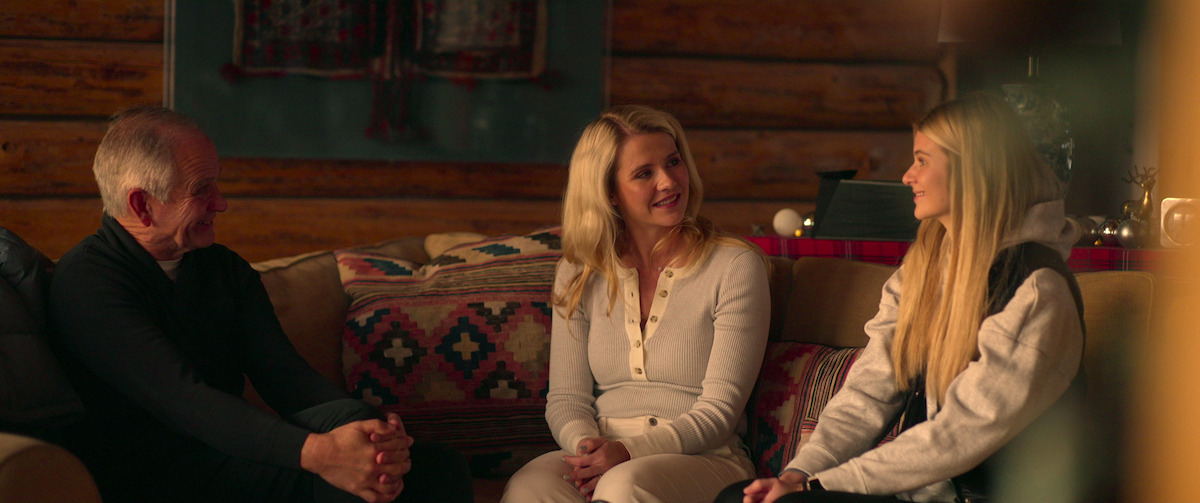
Is Elizabeth Smart still close with her sister, Mary Katherine?
“She’s my hero. She saved me,” Elizabeth tells Skip Intro about her younger sister, Mary Katherine, who was the only witness to Elizabeth’s kidnapping and whose recollections led to the identification of Brian David Mitchell, a local eccentric who called himself Emmanuel and whom their father had once hired to do odd jobs on their home.
“She got her bachelor’s, she got her master’s. She teaches special education. I don’t want to say she puts me in my place all the time, but she educates me all the time,” Elizabeth tells Tudum. “Honestly, she’s still a hero.””
Where are Brian David Mitchell and Wanda Barzee today?
As depicted in the documentary, Elizabeth Smart’s captors, Brian David Mitchell and Wanda Barzee, were both apprehended following her rescue. Elizabeth was in her twenties before Mitchell was ultimately tried in court, which was — as reiterated in the documentary — a necessary but deeply uncomfortable ordeal for her. “I remember sitting in the courtroom looking at the defense team and I just had such disgust. How could people, how could attorneys defend what my captors had done?” Elizabeth says on Skip Intro. “At the end of the trial, I remember the lead defense attorney coming up to me and saying, ‘Elizabeth, I want you to know I did the absolute best job I could do so that you never have to go through this again, so that this trial could never be appealed, so that the ruling was final.’ … In that moment, I changed my opinion instantly. I had such a deep respect [for them].”
In 2010, Mitchell was found guilty of kidnapping and transporting a minor across state lines with intent to engage in sexual activity. He is currently serving out a life sentence without the possibility of parole.
Barzee pled guilty in 2009, and received a 15-year sentence in prison. After time spent in federal and state prisons, she was released in 2018 for previously uncredited time served. In 2025, she was arrested at her home in Salt Lake City after allegedly violating the terms of her status as a sex offender. “I was disappointed when she was released from prison,” Elizabeth says on Skip Intro. However, she sees a silver lining: “Knowing that she was released also gave me such compassion for all of the victims whose perpetrators are never even named, and who live in constant fear of them coming back or hurting them again. As disappointed as I am, I am grateful for that understanding and compassion now that I’ve learned.”
Kidnapped: Elizabeth Smart is now streaming on Netflix.








Publicar comentário