Transforming justice – The Shift News
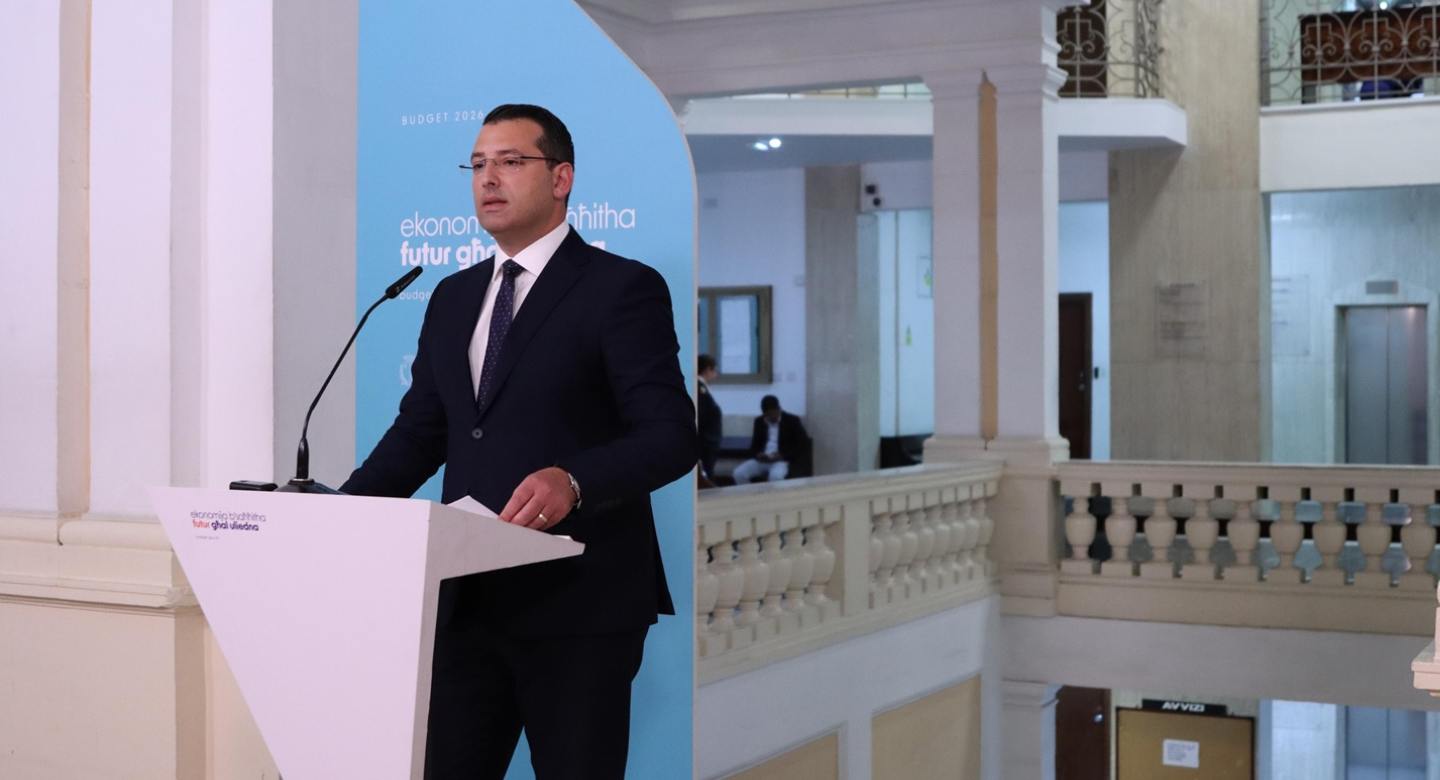
When Justice Minister Jonathan Attard welcomed delegates from 46 different Council of Europe member states, he bragged about his government’s “long-standing commitment to ensuring that justice is accessible, effective and efficient for all”.
Those delegates must have been pretty impressed. They might have probably been far less impressed had Minister Attard told them the truth – that Malta ranks among the worst EU countries in judicial backlogs and unbelievable delays.
Malta is still at the bottom of the EU scoreboard in terms of the time it takes for the court to decide a case instituted against Attard’s government. And despite his bluster, Labour won’t lift a finger to change that.
When it comes to another Labour favourite – money laundering – Attard hasn’t made things better, he’s made them worse.
In 2021, each money laundering case took 18 months. In 2024, the delay had risen to 21 months.
Two years ago, Malta had the lowest number of judges per capita – just nine per 100,000 residents. Croatia has 42 per 100,000.
No wonder then that the last EU rule of law report described Malta’s under-resourced, slow courts as an ongoing concern. The European Commission’s report noted that “some further progress in some areas, but Malta has failed to take any action in several others”.
Cases in Malta take longer than almost anywhere else in Europe, and the backlog of pending cases is still on the rise.
Until 2025, Malta still had the lowest number of judges and magistrates per capita than any other EU country, by far. The European Commission’s report stated that “the number of final judgements in corruption cases remains low”. No surprise.
After that embarrassing denunciation by the European Commission, the Minister’s reaction was hilarious.
“The report highlights various noteworthy and significant developments that have occurred in Malta over the past year to strengthen the rule of law,” he said. His government, Attard bragged, has an “unwavering dedication to reinforce the rule of law in Malta and was committed to further good governance reforms”.
Maybe those good governance reforms include dumping the obligation for ministers to declare their assets and removing the requirement to declare their spouses’ income and assets. The European Commission would be thrilled to hear about Prime Minister Robert Abela’s “unwavering dedication” to furthering good governance.
The Commission noted Malta’s slide in the Corruption Perception Index in its report. Dumping ministerial declaration of assets is hardly the best way to correct that inexorable slide into corruption. It seems more like a free pass.
The justice minister keeps bragging about how great his reforms are, how huge his investment has been, and how amazing our system has become.
It seems he’s not convinced anybody – not the Council of Europe, nor the Venice Commission, who have repeatedly flagged the massive court delays. The European Court of Human Rights has found Malta in breach of its duty to deliver timely justice on several occasions.
To highlight the hollowness of Attard’s pompous boasts, on 22 January, Stephen Caruana was given a suspended sentence for a homicide through excessive self-defence that took place in 2008. That’s 18 years ago.
Caruana killed 28-year-old Neville Baldacchino by shooting him in the head, hand and leg with his shotgun almost two decades ago.
Just days before, while presenting warrants to six newly qualified lawyers, Attard was still spewing his usual nonsense, saying “government is committed to delivering a more effective and efficient justice system”.
“Court performance figures for 2025 confirm our commitment to further improvements,” he said.
The truth is that Malta has six murders per year on average, while Attard’s amazingly efficient judicial system resolves just 1.5 cases per year. Court procedures for half of all the murders committed between 2010 and 2020 have still not been completed.
One fourth of those 88 murders have still not resulted in any murder charges. In 10% of all cases, the delays were long enough to allow the suspect or the accused to either abscond, die or get murdered.
Stephen Caruana’s 18-year-long wait for his sentence is not unique. The trial of those suspected of the fatal stabbing of Sion Grech in 2005 started in 2023 – 18 years later.
Brian Rosso was murdered in 2005, too. The trial over his murder commenced 18 years later.
Even in the high profile assassination of journalist Daphne Caruana Galizia, with the whole world watching, one of the chief suspects is still waiting for his trial to start, almost a decade after her murder and seven years after he was first arrested.
Noel Xuereb was charged in January 2007 with corruption-related offences, but his final judgement came on 1 April, 2019 – 12 years after the original charge. Unsurprisingly, he was acquitted.
Clive Butler was first arrested in 2011 as part of a major international heroin trafficking investigation. The prosecution’s bill of indictment was only presented in 2022, 12 years after his initial arrest. He was awarded €4,000 in damages for the excessive delay.
Jonathan Roger Protelli was put on trial last year, 2025, for alleged cannabis trafficking in 2013.
Tyrone Fenech was suspected of trafficking ecstasy in 2004, but his case dragged on until 2022, when he too was acquitted because key prosecution evidence was no longer admissible.
That’s not justice, that’s mockery.
Only Jonathan Attard thinks that’s an “effective and efficient justice system”. It doesn’t take a genius to realise that 18 years later some of the witnesses may already be dead or demented.
Those still alive and with their wits about them would probably have forgotten most of what they witnessed. The details of the circumstances would certainly be a very dim, distant memory easily challenged and discredited by aggressive defence teams.
If you’re wondering how it’s even possible to have to wait for 18 years for a trial, you should know that, until last year, Malta had just one jury courtroom.
As of last year, we now have two – a massive achievement that the minister heralded with a press release and a walkabout at the courts of justice for the media.
“One of the most significant developments,” Attard’s press release stated, “which for the first time enables multiple jury trials to run concurrently”. And he thinks he’s transforming justice.














Publicar comentário