Why Will’s Coming-Out Scene Doesn’t Work
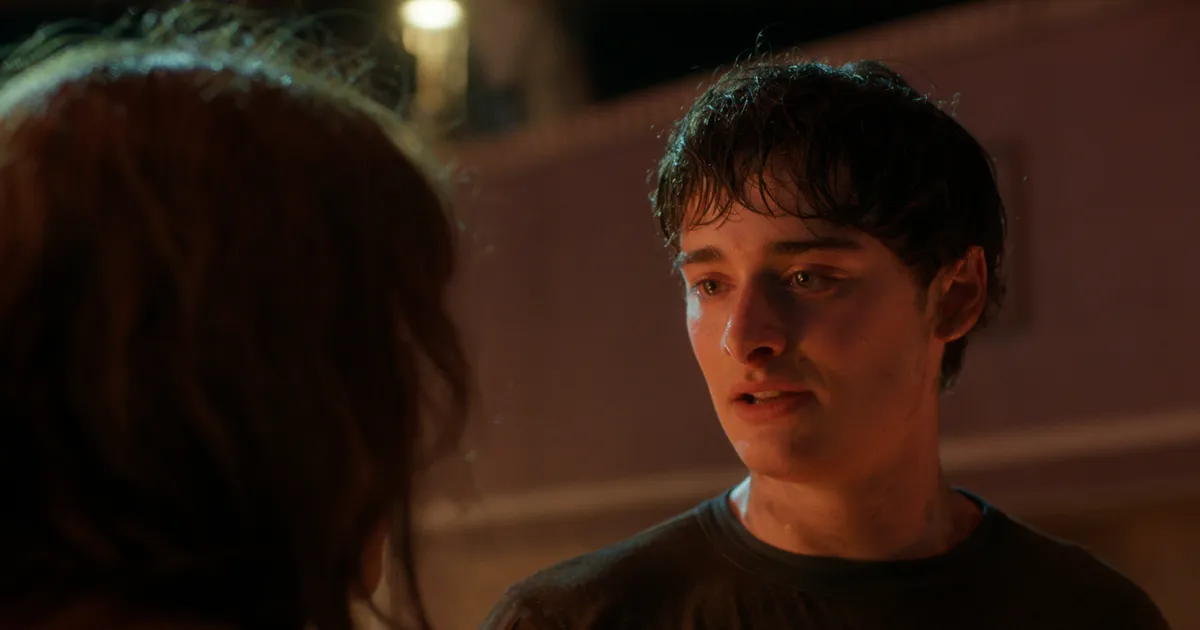
Depending on where you stand nine years into Stranger Things’s run, Will’s big scene in “The Bridge” might’ve moved you to tears — or fallen entirely flat.
Photo: Netflix/Netflix
Spoilers follow for “The Bridge,” the penultimate episode of Stranger Things.
Late in the fifth and final season of Stranger Things, Will Byers finally comes out of the closet. The show has been building to this moment for a long time. In fact, in the very first episode, Joyce claims that Will’s dad Lonnie “used to say he was queer” and even “called him a fag.” In season three, a fight between him and his best friend, Mike, led to the latter saying, “It’s not my fault you don’t like girls.” But queerness only became a key part of the character’s story in the last two seasons, when he started wrestling in earnest with his more-than-platonic feelings for Mike.
We knew this was coming, and now, there’s a narrative reason: With one episode to go, Will and his friends are on the verge of a final push to take out the “psychic serial killer” Vecna, who plans to merge their world with his dreamland (they call it the Abyss) tonight. With Vecna’s remote attacks on Will’s psyche ramping up, the 16-year-old is experiencing visions of his deepest moments of pain — and the loneliness and isolation yet to come in a theoretical future where his coming-out isn’t well received by the people he loves. By facing that possibility head-on and telling his family and friends that he’s gay, Will is asserting his agency and fighting back.
Depending on where you stand nine years into Stranger Things’s run, this scene might move you to tears or fall entirely flat. As a longtime fan with a degree of emotional investment in these characters, I’m susceptible to final-season sentimentality, so it’s hard not to well up when Joyce, Jonathan, and each of Will’s besties individually tell him they’ll always be there for him. This is the payoff we’ve been waiting for, and it mostly works. But this theoretically huge leap forward for Will still doesn’t achieve the emotional power it deserves after five seasons of cumulative storytelling. Something is missing.
Part of this comes down to the unevenness of the writing, particularly the choice to so directly ape Robin’s coming-out journey. Robin and Will’s new friendship this season has been productive, particularly when Robin told him about her Tammy Thompson obsession back in “Chapter Four: Sorcerer.” That scene was big for Robin (and for Maya Hawke, still turning out one of the strongest performances in the cast) but also for Will, who seemed to come to some conclusions of his own about finding answers within himself. But is it necessary for Will to use her exact language when he speaks his truth later? He even name-drops Tammy and says his crush on Mike “was never about him; it was about me,” which Robin said to him almost verbatim. Doesn’t Will deserve an arc that isn’t a conscious retread of another character’s backstory?
The bigger issue is that Stranger Things lost sight of Will Byers as a character over the years. It’s a shame because the show was structured around this kid; he’s the Laura Palmer of season one and not just because his disappearance kicks off the story. We didn’t see Will much onscreen in those early days, but we got to know him through his friends and family. We came to understand him as a shy, sensitive, “different” young boy but also a warm, intelligent, curious, kind one. We cared about him because they cared so much about him — as a result, we also cared about them. Seeing how desperately they wanted to save Will gave us something to root for. And season two wouldn’t work without Will! Integrating him into the Hawkins gang couldn’t have been an easy task, but he slipped into a main role with ease. Key to this was Noah Schnapp’s genuinely impressive performance. He played the “creepy kid” well in the possession scenes; remember the chilling “He likes it cold” moment? He also nailed the more grounded, human beats, like when Will listens to a story from his mom’s boyfriend about fighting off a recurring nightmare. Or when he gets overwhelmed describing his encounter with the Mind Flayer to Joyce, tearfully telling her that “I felt it … everywhere. I still feel it.” Schnapp made it easy to admire this poor kid’s bravery in facing some truly fucked-up shit and to ache for him to find peace.
But the show’s handling of Will started to slip early in season three, when he got shifted to a supporting role. Without anything to tie Will to the central story of that season — the return of the Mind Flayer, this time using Billy Hargrove as its host — he was left to complain about his friends’ incessant girl problems and pester them about getting back into D&D. There were ways the show could’ve made this work, even without an explicit tie to the larger supernatural arc. Was Will suffering from survivor’s guilt? How might someone like this cope with a return to “normal life” after two different, incredibly drawn-out traumatic experiences? Instead, Stranger Things struggled to find a place for the character, focusing too much on Will’s jealousy of Eleven and his bitterness about his friends growing up.
That continued in season four, even as the show addressed his sexuality more directly. Now, Will was mainly around to either yearn for his best friend — a story that never totally worked, especially because the feelings developed off-screen — or to deliver endless exposition about the Upside Down and the supernatural threat du jour. How many times have we gotten that shot of Will touching the back of his neck and gravely saying either “He’s here” or “He knows we’re here”?
With so little material, Schnapp’s performance seemed to decline in kind, a problem that still exists in season five. Squeezing out some tears poses no problem for him, but he can’t seem to convincingly deliver a basic line anymore, and his wide-eyed looks no longer communicate interiority the way they once did. We used to sense every twitch of panic in Will’s shrinking body language and expressive face. We watched him weigh his anxiety about appearing not normal against his bone-deep fear of what would happen if he let the monsters in. But there’s no complexity in Schnapp’s performance now, and it’s hard to say if it’s purely an effect of the writing or the result of some shift in the style of filming. Sometimes child actors just can’t quite make the transition to confident adult actor; Schnapp isn’t the only one in this cast whose performance now lacks the spark of those early, more intimate seasons.
Will still has his moments, especially when receiving wisdom from his brother, Jonathan, or reaffirming his friendship with Mike — and season five has had some success in shifting him back to a central role, hanging much of the final stretch on his connection to Vecna and setting the climax on the anniversary of his disappearance. Will totally ceded the spotlight to Eleven at one point in the show, but now they’re sharing hero duties, which feels closer to the ideal balance. There’s also something powerful about seeing a young queer person embrace who he is and for that to be the force that helps him unlock his “sorcerer” potential and defeat the great evil.
But much of this rings hollow after the show spent years decentering Will’s perspective or only dwelling on his otherness in shallow ways. Not every coming-out arc needs to present something new or groundbreaking, but this one hits all the expected beats — like most of the stories on latter-day Stranger Things, it plays out in just a handful of scenes sprinkled conservatively throughout the last few episodes. Integrating a character’s queerness into the narrative should add a layer of understanding, but in this case it further flattens Will, turning his lifelong issues with socializing into an empowering but simplistic A-to-B growth arc. The Will Byers of season five has a lot more screen time than the Will of season three or four, but I don’t seem him or feel for him like I once did.
Of all the kids who aged out of their roles in Stranger Things, Will may be the biggest casualty. He was always defined by his innocence, his lovability somewhat contingent on the built-in viewer empathy that comes with watching a child suffer. But he was also once my favorite character, the most underrated role and performance in the show. Maybe Will was never supposed to make it to season five alive; maybe the writers were wrong to give him his own forced romantic angst and “normal kid” problems like the others.
Or maybe something fundamentally changed in the DNA of this series, and the shaky treatment of Will is emblematic of that shift. The show still has heart, sure, and it’s still capable of making me cry. (Steve and Dustin got me a couple times in this new batch of episodes.) But those moments of genuine feeling are often buried, little blips between hours of mind-numbing, murkily lit action-movie theatrics. Season five is all climax, and as a result very little of it feels truly climactic.
Back in season two, Will listens to Mr. Clarke tell the story of Phineas Gage, who improbably survived an iron rod through the head but became a different man as a result. His friends referred to him as “no longer Gage” — a phrase that clearly resonated with Will, who earned the nickname “Zombie Boy” after seemingly returning from the dead in season one. I went into this final stretch of episodes expecting Will to shrink into the background like usual, and he didn’t. But the truth is the issue was never screen time. What has changed isn’t just how the writers think of Will Byers but how they think of the show in general. Stranger Things is still fun, but it’s no longer Gage.
See All











Publicar comentário